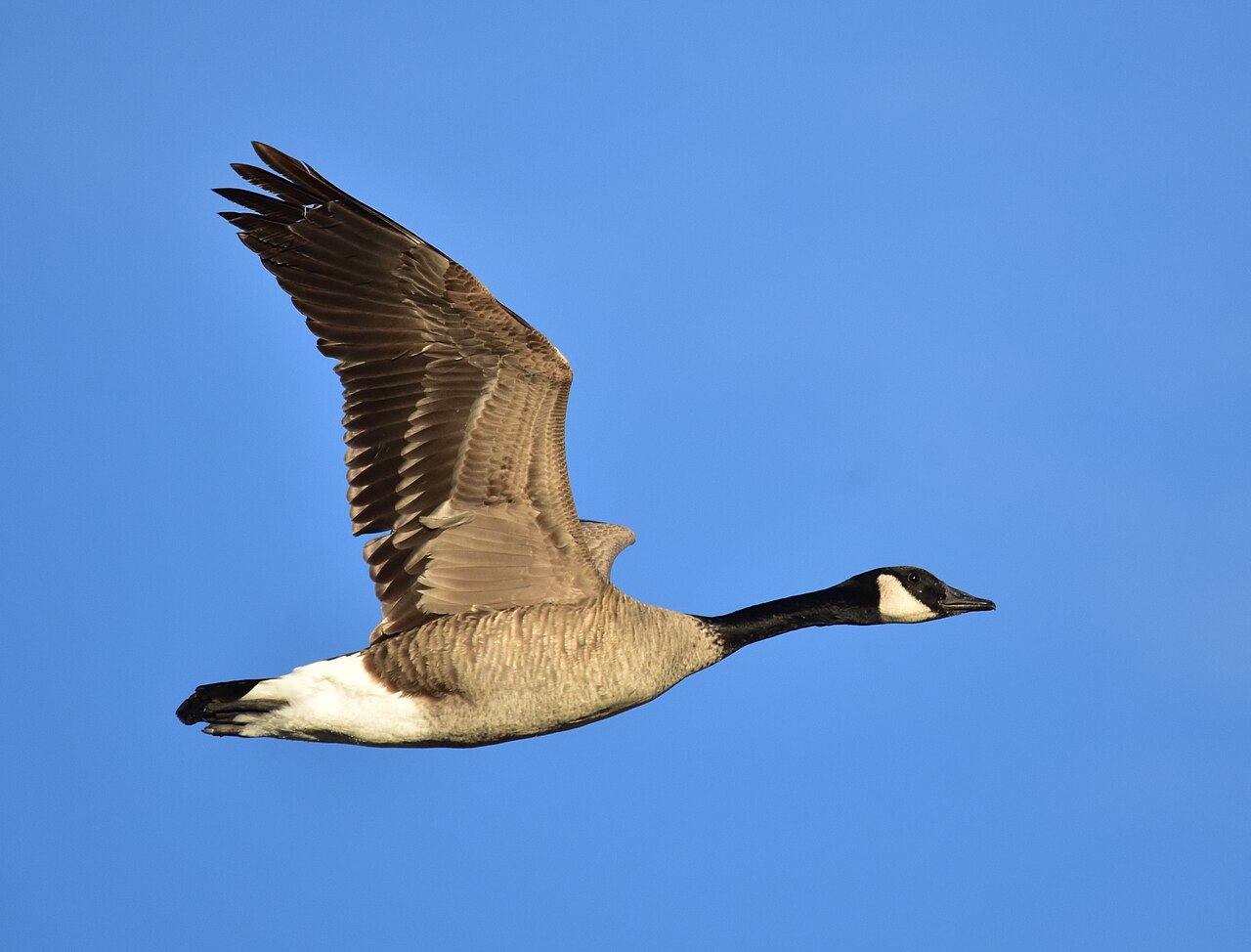
Nēnē: Conservation Success Against a Grim Background
The world is dying and the alarm is blaring. Yet we have story after story of conservation success. Good news is abundant and I like to believe that we currently are at an inflection point. We have never in history had better tools at our disposal to keep conservation efforts moving.
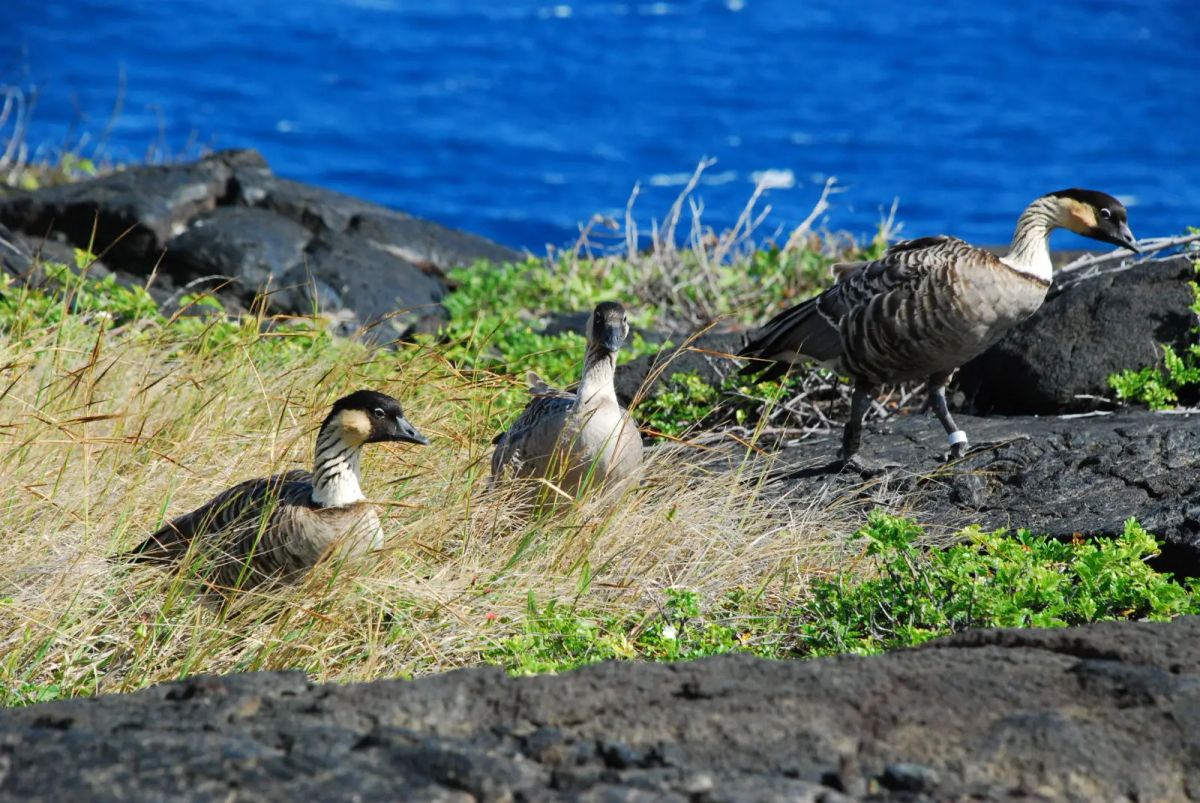
500,000 years ago, Hawai’i’s “Big Island” erupted from the pacific and became lush with plants, bugs, and birds. Among these new residents are Nēnē. Hawaiian geese that have narrowly escaped Hawaii's long history of extinctions.
As Hawai’i's largest island forms, we find our first subfossil evidence of these large birds. Fossil evidence implies that Canada geese blew off course and found ample food, empty niches and few predators in their new Hawaiian lifestyle. This allowed their populations to grow and adapt to the islands at a rapid pace alongside some of the Hawaiian ducks. In a case of convergent evolution, the geese and ducks underwent island gigantism. A phenomenon where animals get larger on island due to lack of competitive pressures they receive in their home environment. 7 species populated the Hawaiian Islands from Hawaii to Kauai.
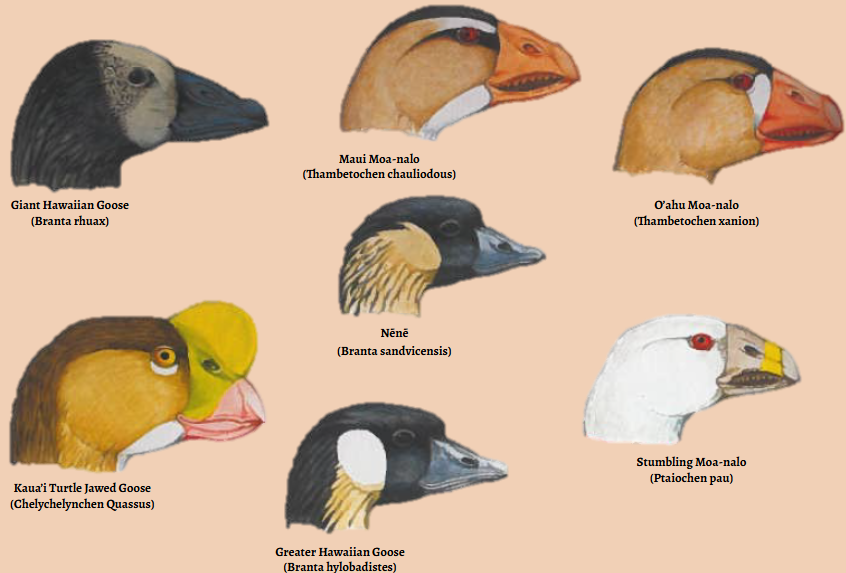
The Giant Hawaiian Goose (Branta rhuax) is the largest goose in history. Standing on strong legs and sporting tiny wings this goose averaged nearly twice as heavy as the average Canada goose (18-20lbs). The webbing on its toes lost to time, this goose became purely terrestrial. Forming social groups and grazing on ferns, flowers and leaves. Across islands we find other incredible large terrestrial birds
The Kaua’i Turtle Jawed Goose (Chelychelynchen Quassus) would forage on the island’s flora with its aptly named turtle-like bill. It’s neon green casque attracting mates and our prehistoric associations.
On Maui Nui, flightless Moa-nalo (Thambetochen chauliodous) evolved from the Hawaiian ducks. Bulky herbivores with toothlike projections on their bills. Moa-nalo may have also traveled in small groups to protect their young from hawks and owls while exposed on the coast. Maui Nui was also home to the Greater Hawaiian goose (Branta hylobadistes); another large goose that was beginning to lose the ability to fly. As well as the Stumbling Moa-nalo (Ptaiochen pau) which lived in Maui’s mountains.
O’ahu sported no true geese but the niche was filled by it O’ahu Moa-nalo (Thambetochen xanion), smaller but starkly similar to the Maui species regardless of the lack of land connection between the islands.
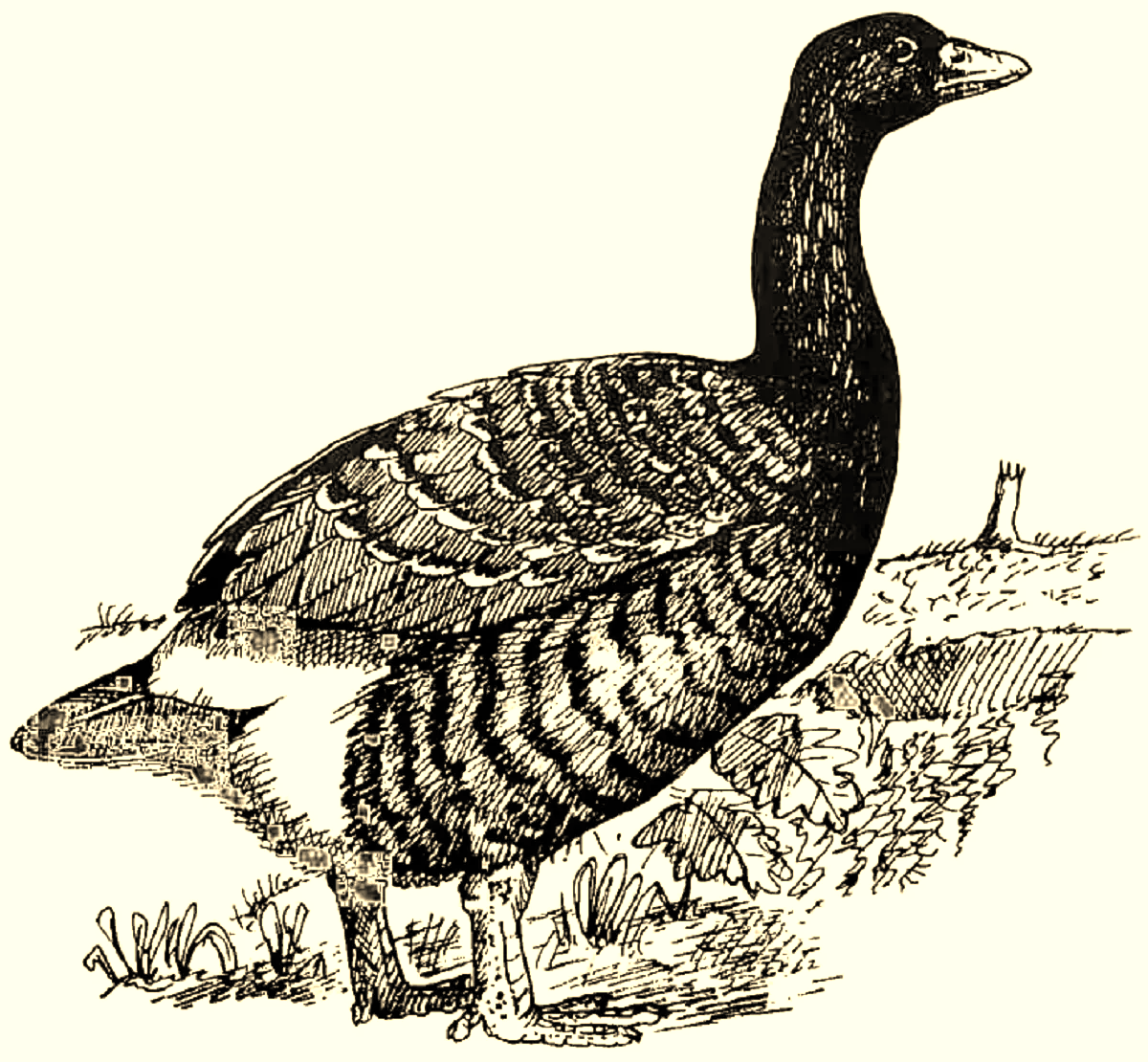
Finally, there is the most famous and the smallest of these geese, Nēnē (Branta sandvicensis). Nēnē feet are partially webbed, and their wings are full in size. Still, they are not Canada geese. Nēnē necks are adorned by a striking collar of striated yellow white feathers that shows their black neck peaking underneath. Nēnē are found amongst lava flows, shrubland, and grasses. Nēnē mate on land, unlike other waterfowl. Nēnē are smaller than the average goose weighing approximately 3-6 pounds demonstrating the phenomenon of island dwarfism. Nēnē are the State Bird of Hawaii. The last surviving species of Hawaii’s giant terrestrial birds. The rarest geese in the world.
Within the last 700 years, 15% of the global bird extinctions have happened in Hawai’i. 77 species of bird no longer fill the forests, seas and skies. Their calls quieted by time. There are two distinct periods of extinction for Hawai’i, pre and post 1778. Before 1778 Hawai’i was first home to Polynesian voyagers that made Hawaii their home. It is highly likely that human occupation was what ended the reign of Hawai'i's native geese. The Polynesian people notably lived well with the land, Malama or the stewardship of the island being a core value of Polynesian people still expressed today. However, people cannot avoid bringing change. The geese may have expressed island tameness, a phenomenon where species such as the Quokka today; show no fear of people as we are not perceived as predators. A large goose with valuable feathers and meat; would be impossible to pass up. The introduction of pigs and rats would be catastrophic to the island's fragile biosphere that seldom receives new inhabitants, let alone so many at once. Pigs destroy habitats and rats raid nests. The Nēnē has the longest gestation period of any goose living today making it, and likely, its past relatives, highly vulnerable to egg destruction.
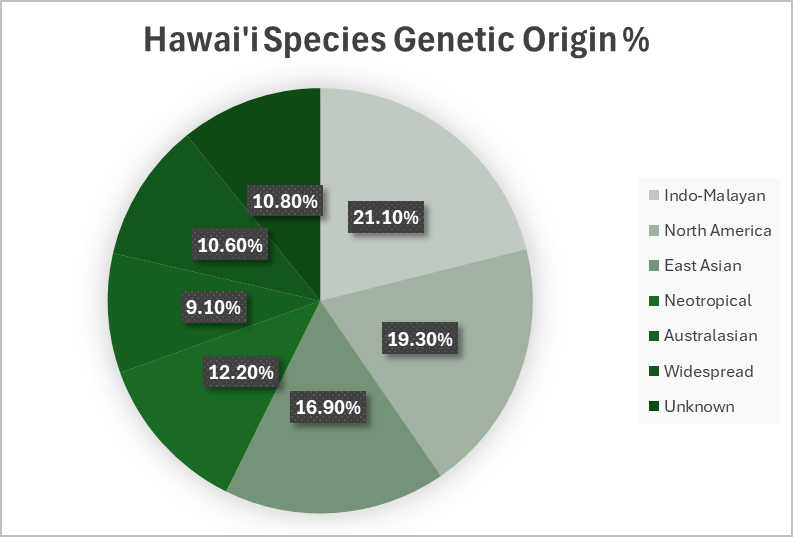
The Hawaiian Islands create one of the world's most unique biospheres. Endemic species have been traced back to 5 primary locations. Pacific currents play an integral role in the distribution of life to the islands. Places with currents that move in the direction of Hawaii such as Malaysia and North America have an easier journey to this island and increase the likelihood that the species is able to establish itself and adapt to the islands over time.
This uniqueness of Hawaii's native species is only one example of how Hawai’i is one of the world’s most unique places. Hawaii’s ecosystem is also exceptionally fragile as it is shielded from rapid change and the borderless diseases of continents. In 1778, European colonists came ashore in Hawai'i and brought devastation to both the islands and its native people. Over half of the 77 bird extinctions happened as a direct result of colonization. Clearing land for exploitative farming that destroyed habitats. Rats, mosquitos and mongoose tore through native populations. Isolating birds that once lived on 100% of the island to the tips of mountains where the invasive pests could not reach. Ecological terror that continues today. By 1950, this terror threatened to claim the last of Hawaii's geese. Only 30 individual Nēnē remained.
In 1893, 6 businessmen led a coup to overthrow the Hawaiian monarchy. US annexation of the islands would give businesses such as the Dole fruit company more power to exploit the Hawaiian land and people. Queen Liliʻuokalani was ousted and replaced by Sanford Dole, acting as president until US annexation took governing control. Royalists staunchly opposed the takeover. Native Hawaiians and even wealthy families such as the Shipman’s lobbied and petitioned for the restoration of the throne; 20,000 signatures were sent to Washington. President Grover Cleveland opposed the power grab and declared the coup an illegal act of war. This was ignored by Dole. Years of discontent continued, culminating in an armed rebellion where royalists imported weapons to Honolulu to restore the monarchy. The rebellion ended in 1 death and the capture of the rebels. Queen Liliʻuokalani was placed under house arrest for being implicated with the rebellion. Forced to sign away the throne in exchange for the lives and safety of arrested royalists. In 1897, President McKinley signed the Newlands resolution, officially annexing Hawaii as a US territory. Further exaggerating the harm to be done to Hawaii’s land and people in the years to come.
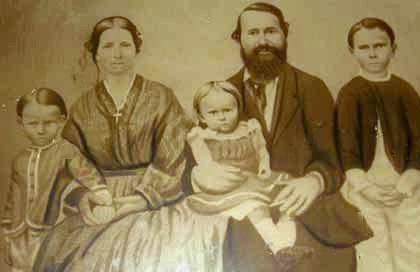
Birds have long been the nepo babies of the conservation conversation. The political will, the funding, and societal positioning of key benefactors: has saved species time and again. Young Herbert Cornelious Shipman began to notice the decline of the Nēnē in 1918. With 4 birds, a massive estate and an inheritance larger than most NYC trust funds., Herbert begins the 100-year legacy of Nēnē conservation. Heir to the W.H. Shipman company and its many land holdings across Hawaii. These 4 geese lived a pampered life on the Puna Shipman estate and would go on to be the foundational members of a Nēnē breeding program. Small gene pools are not ideal when attempting to bring a species back from the brink of extinction. In 1946 a tsunami nearly snuffed out the flock. Diseases such as avian malaria could spread with impunity. Yet despite the challenges, Herbert and the Nēnē persevere. The flock is moved to 'Ainahou Ranch after the tsunami, and as luck would have it, Nēnē breed well in captivity. By 1960, Nēnē were being released back into the wild to start establishing their own populations. Grazing again on lands undoubtedly changed during decades of their absence.
Dec 28th, 1973, the Endangered Species Act was passed, immediately bringing more Federal protection to the Nēnē as “the most comprehensive legislation for the preservation of endangered species enacted by any nation” - US Supreme Court. Through decades of continued effort, by unnamed and unsung people, the Nēnē was removed from the endangered species list in 2020. 102 years after Herbert Shipman started a flock to preserve the Hawaiian goose there were stable populations on Hawai’i, Maui, Moloka’i and Kauai.
Now, we live in a time where we can see the world's rarest goose with relative ease. I have seen many while visiting Kilauea lighthouse. Accompanied by yellow diamond warning signs demanding drivers slow down and be cautious. A city planner’s version of “smell the roses”. Still, these Nēnē need our attention and care as their fight is not over. The modern environment of Hawaii has significant challenges. Mongooses lurk in the dark. Swaths of land have been privatized and are inhospitable to our avian friends. The Nēnē are still actively protected. While no longer under the protections of the endangered species act, without proper wildlife management the species is likely to again begin a rapid decline.
Bring back the good ole days of extinction. Massive meteors making the earth ring before darkening the skies for decades or centuries, single cell organisms emitting so much oxygen as waste that they develop the entire backbone of plant life and our atmosphere today. When you picture these massive extinction events it is easy to contrast against the peaceful scenery of nature today. A bird is chirping; there is wind in the trees and the water glistens romantically. Many misinterpret Darwin’s theory of evolution; citing that if an organism cannot adapt it must be replaced. This is a gross extrapolation of the theory and does not factor in or justify human impacts on this slow and natural process.
Currently human impacts are responsible for the ongoing Holocene extinction. Extinction rates today are estimated to be 100-1,000 times greater than background extinctions. Most of our attention has been focused on birds and mammals. These organisms are of great importance to their local ecosystems, highly visible and likely to garner sympathy on a local or international level. The causes of these events are extreme. Ocean acidification, which bleaches coral and makes the calcium mollusks need to build their shells unusable. Global mass pollution which leads to plastic in the bellies of our turtles and birds. Disruption to insect populations leading to 9% less insect biomass per decade. Old forests cleared for agriculture decimate soil and destroy native habitats. Overfishing destabilizes target species and bycatch, the latter is often unceremoniously tossed overboard, dead.
The world is dying and the alarm is blaring. Yet we have story after story of conservation success. Good news is abundant and I like to believe that we currently are at an inflection point. From this point in history, we will look back at a graph and say, "I was there!", the bottom and now I proudly stand at the crest of progress. We have never in history had better tools at our disposal, never had better education, and globally there has never been more public pressure to preserve our home. What could one individual possibly do in the face of constant and ever-changing global crises? I have no answers. And yet, when problems are so pervasive it is inevitable that we will notice the ones that affect our local communities. It is important that we do. I can only speculate what Herbert Shipman thought his effort would amount to. Although, I think I don’t care. The actions he took didn’t exist in a vacuum; it is thanks to many hands working together that we have Nēnē in the wild today. Even as a speck on a speck, our actions every day, matter.
Sources & Credits
Special thanks to Michael Walther and Julian P. Hume, your writings and vibrant illustrations on the extinct birds of Hawaii is the inspiration for this amateur ornithologist's first written work. Thank you for inspiring me and being an excellent Christmas present. Dear reader, if you've made it this far, you might want to purchase the book. https://mutualpublishing.com/product/extinct-birds-of-hawaii/
Walther, M., Hume, J. P., Frohawk, F. W., & Keulemans, J. G. (2016). Extinct Birds of Hawaiʻi. Mutual Publishing, LLC.
Giant Nēnē , H. Glyn Young, Simon J. Tonge, Julian P. Hume, wildfowl.wwt.org.uk/, article 995, Creative Commons Attribution-NonCommercial 4.0, https://www.fws.gov/media/giant-nene
Sean Hagen, Nēnē, Album Hawaii Day 1, https://www.flickr.com/photos/rebelcan/6861124096/in/album-72157629647625917
Billy Bergen (2003). Loyal to the land: the legendary Parker Ranch. University of Hawaii Press. p. 308. ISBN 978-0-8248-2692-5.
John R. K. Clark (1985). Beaches of the Big Island. University of Hawaii Press. p. 32. ISBN 978-0-8248-0976-8.
"Saving the Nene, the World's Rarest Goose". National geographic. Vol. 128. National Geographic Society. 1965. p. 749.
W.H. Shipman, limited history: Over 140 years of stewardship. W.H. Shipman, Limited History | Over 140 Years of Stewardship. (n.d.). https://www.whshipman.com/our-history
 Contributors to Wikimedia projects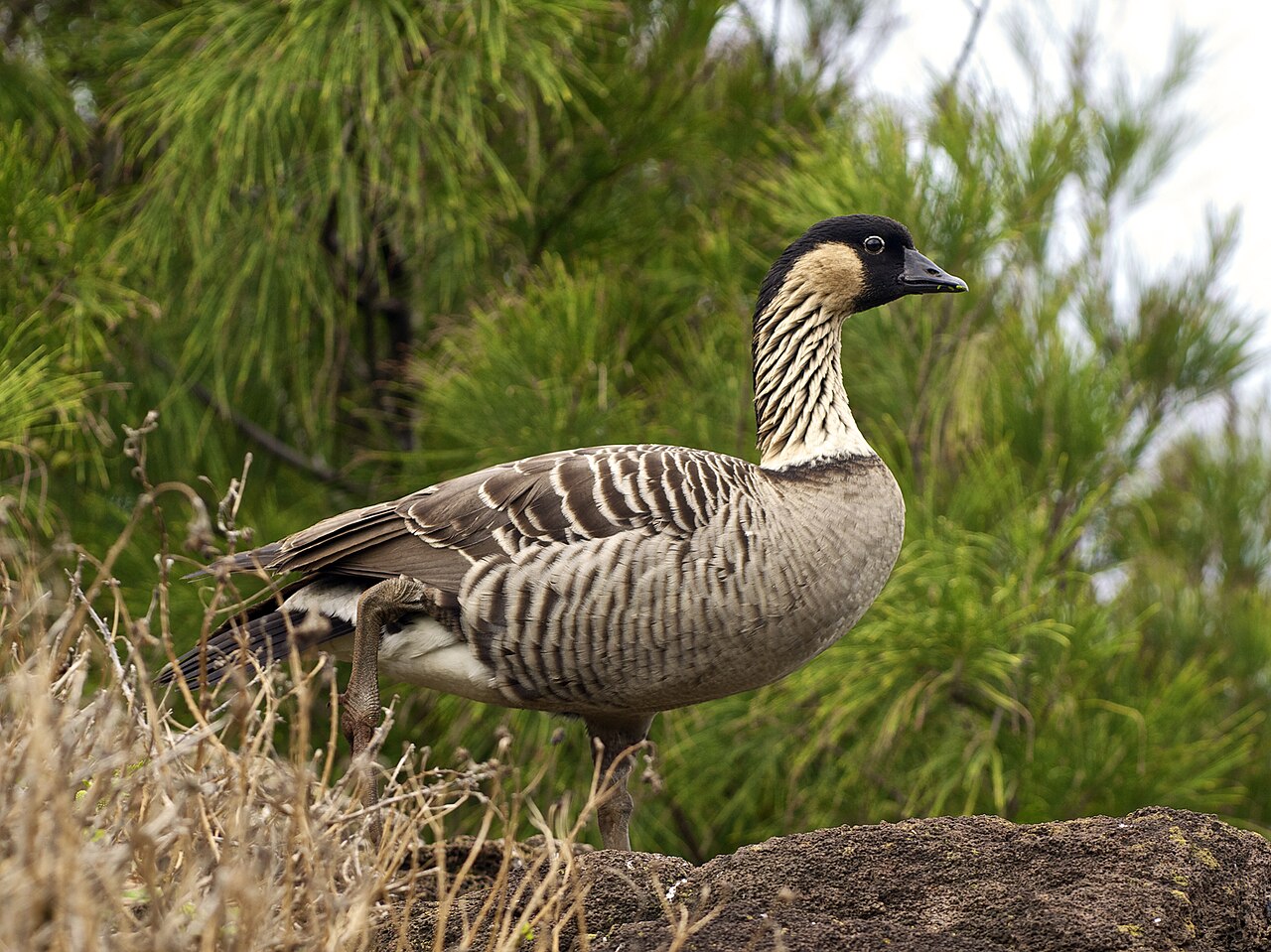
 Contributors to Wikimedia projects
 Contributors to Wikimedia projects