How Elon Musk Conned America
How did Elon Musk become the richest person in human history? He’ll happily tell you it's because he founded PayPal and Tesla. He will say he’s a visionary, an innovative engineer, and a once-in-a-generation mind. The fact is, almost none of that is true.
In some of the earliest press accounts of the company, Eberhard was referred to as “Mr.Tesla,” and Musk was noted as an “early investor,” and this didn't sit right with him at all.
How did Elon Musk become the richest person in human history? He’ll happily tell you it's because he founded PayPal and Tesla. He will say he’s a visionary, an innovative engineer, and a once-in-a-generation mind. The fact is, almost none of that is true. Tesla was founded by two engineers who were later pushed out of the company, with their history rewritten. PayPal's success only happened after he was fired from running it. Musk has staked his entire life on the idea that his reputation can lead him further than his actual accomplishments ever did. This reputation didn’t come from a catalog of successful businesses or a tactical business mind, but instead, it came from standing next to someone else's work long enough that people just forgot whose it actually was. In even more dramatic cases, he sued his way into a label (like co-founder) that he had never earned. Even after all his failures, he is still the richest man in the world. The gap between what he's built and what he's been retroactively credited with is not an accident, it’s the very product he's been selling his whole life. Understanding how he engineered these long cons can tell us something about how he eventually ended up with his hands in the US government, and what power he holds going forward.
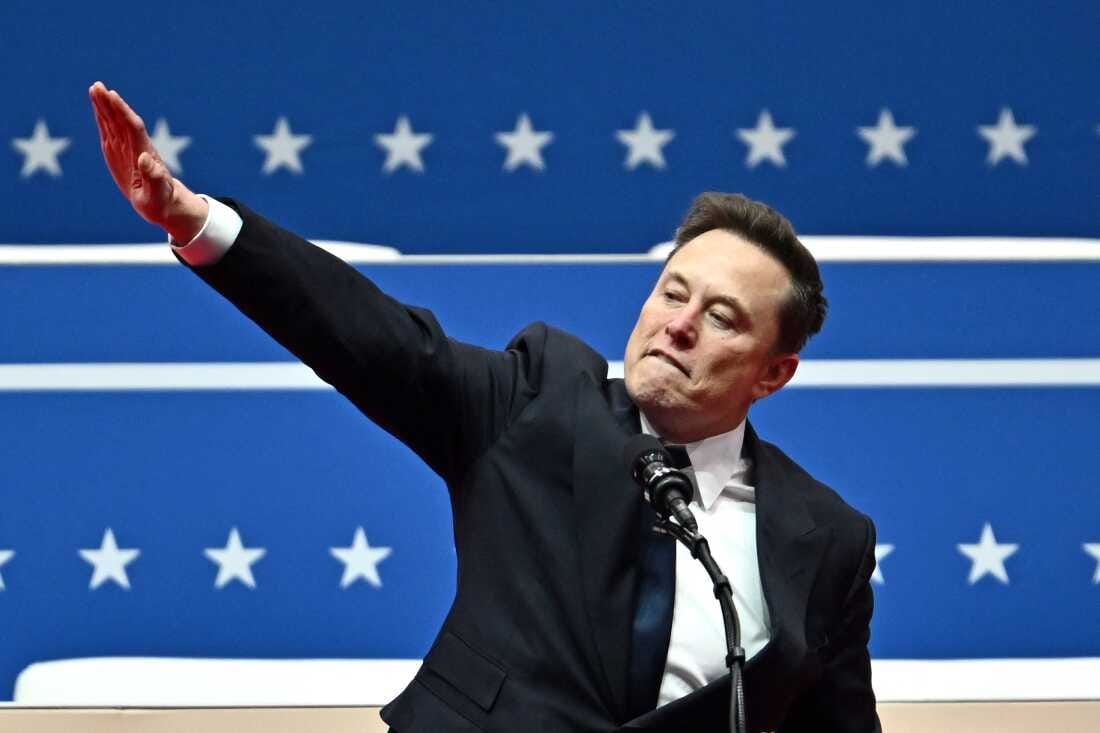
Elon's blatant disregard for democratic oversight and democracy as a whole didn’t just appear out of nowhere; it has roots that go back generations in his family. Elon Musk was not born in America, he was born in Pretoria, South Africa. In the early 1950s, Elon’s grandfather, Joshua Norman Haldeman, after his political movements failed in Canada, looked to apartheid South Africa as a place where his ideology could take root. While many viewed apartheid as a fundamental backsliding of human rights, or worse, Elon’s grandfather vehemently supported it, and it was those policies of racial discrimination that convinced him to move his family there. Haldeman believed in a political ideology called technocracy. The ideology is far more complicated than we can cover in full here, but in short, the belief is that democracy had failed as a political system and needed to be replaced. They argued that all of North America should be united into one big nation, which they called “The technate of America”, and that all politicians should be replaced by a group of the technocratic elite. The belief was that the capital owners and scientists could run the country better than any politician elected by the commoners could. Haldeman was a central figure in Technocracy in Canada in the 1930s, and at the start of World War II, sympathized with Hitler and the Nazis. Eventually, the Canadian government banned Technocracy in 1940, citing that it was a threat to national security. Shortly after its ban, Haldeman was arrested by the Royal Canadian Mounted Police (RCMP) for his role in the movement. After his release, he left for South Africa when it became politically untenable to remain in Canada. I'm not imposing the sins of the grandfather (for which there are so many I can't mention) onto the grandson, but if we listen to Musk himself, he still believes the same throughline that his grandfather did. He has several times called for engineers and capital owners to run governments. He has openly expressed contempt for regulatory processes, elected officials, bureaucratic oversight, and the democratic process. He has even performed Nazi salutes in speeches. I’m not trying to say there is a straight line from Haldeman’s gray uniformed technocracy movement to Musk's spotlight in the Oval Office, but I don't believe there needs to be. Even if it hadn't been handed down directly from father to son, the water this family has swum in for generations should not be hard to name. Musk was handed an unelected mandate to dismantle federal agencies and replace decades of institutional judgment with his own. The word for what he was doing had already existed; in fact, his grandfather spent his entire life trying to define it. In the eyes of his Nazi-loving, apartheid-backing grandfather, Elon Musk is everything Haldeman wanted to be himself, but failed.
The largest protest movement in recent American history is the “No Kings” protests, but imagine, in the wake of Elon’s DOGE disaster, if people like Peter Thiel, Sam Altman, and Jeff Bezos were also brought in to run a federal agency, and had as little oversight and as much federal power as Musk did. The protests are not only about Trump or ICE, but they are about the growing unelected power that is centralizing in America, and Musk is one of the few named directly in this opposition. In the three rounds of protests organized, an estimated 7 million people across 3,300 cities and towns have gone out into the streets to oppose authoritarianism, billionaire-first policies, power handed to the unelected uber-rich, and the gutting of federal agencies that no one voted for. This marks the largest single-day demonstrations in American history. Approximately 3.5% of the American population has taken to the streets to oppose the very system that Haldeman spent his life trying to build. It should come as no surprise how Musk has grown to this level in politics, after all, Musk grew up in a family that believed capital-owning kings were the whole point.
Before Elon had any political power, and before he ever acquired the fortunes that have come to separate him from the other uber-rich of the world, Musk had come to develop a very specific skill that served his interests in the decades to come. That skill was not engineering prowess or vision for the future, but the ability to make the right investors believe a thing was further along than it actually was. That skill came to the surface the first time he tried to raise funding, when he and his brother were creating Zip2. In the mid-90’s, the internet was still new and largely uncharted. In 1995, Musk and his brother, Kimbal, saw the new boom and wanted to capitalize on it for themselves. Their idea, while tame by modern standards, was pretty revolutionary at the time. They wanted to create a sort of digital Yellow Pages where people could find their city and see nearby businesses. It incorporated maps and directions, and even had systems for communication between businesses and their prospective customers. Kimbal Musk handled most of the sales, and at night, Elon was coding. Eventually, as the internet and their customers grew, outside attention started to circle them. Investors wanted a piece of this new company, and in 1996, the venture capital firm Mohr Davidow was considering investing millions in it. In a bid to seem more appealing and state-of-the-art, Musk built large plastic structures around a standard computer to make it appear that Zip2 was being powered by a supercomputer. Eventually, this gambit paid off, and the firm invested $ 3 million in Zip2, but there was a big catch. To venture capitalists, Elon was too inexperienced and rash to be put in charge of this growing business, so they removed him as CEO and appointed Rich Sorkin in his place. Musk attempted to return as CEO in the years and months that followed, but the board rejected him. The fact is pretty simple: the people who actually controlled the money (and therefore the company) didn't trust him to run what he had built. In 1999, Compaq acquired Zip2 for $307 million, and Musk, with about 7% of the shares, made out with about $22 million for his stake. While that's enough money to ensure you and all of your family would never have to work again, it should be noted that the 7% Musk owned tells us something about how much control he actually had in the majority of the company's lifespan. It should also show us a pattern that will continue. Musk joins a company early in its life, that company draws in outside investors, Musk is eventually removed as figurehead, and then the company does well. Elon will always position himself as one of the driving forces behind his company's successes, but so far, that claim isn’t supported by any evidence.
Musk left Zip2 after having been removed from running it, and having watched outside investors reshape it into something more profitable than he’d imagined, and he walked away with a large check and no CEO title. With $22 million dollars in his pocket, Elon's next great business plan happened pretty quickly. Before the ink had even dried on the Compaq deal, Musk put half of it into his next great vision, the original X.com. Following the theme of capitalizing on the infancy of the internet, X.com was trying to be one of the first all-in-one online banks. Before Cash App and Venmo, the core concept of the company was an email based payment system. At the time, many banks lacked any internet integration, but Musk wasn’t the only one with this idea. Their top competitor at the time, Confinity, founded by Peter Thiel, had its own money transfer service called PayPal. PayPal had more active users, but X was right behind them. Instead of competing with each other, as is the stated goal of capitalism, the companies decided to merge and monopolize the online banking space. Musk, as the largest shareholder after his initial investment, became the CEO of the merged company and retained the name X.com, much to the disagreement of all of its employees. During his short time as CEO, Musk made several controversial decisions that would come to define his shaky leadership. The system X used was the standard at the time and called Unix. Musk decided they needed to rebuild the system on Microsoft software, and the engineering team for the company vehemently rejected it. This was such a big issue at the time the other founder, Peter Thiel, resigned. Almost directly after the first setback, a security flaw was discovered in the newly established code that allowed users to send money to themselves by knowing the account and routing numbers of others. Confidence in Musk was at an all time low. If the previous debacle over Unix wasn't bad enough, X was now suffering from a huge fraud problem, and the company was bleeding about $10 million dollars a month. Just months after taking over the merged company, Musk went on a honeymoon to Australia, and his critics used this as a time to plan a corporate takeover of his position. Levchin, Thiel, Hoffman, and Sacks, all board members or partial owners, secured the board's backing in a meeting at Sequoia Capital’s headquarters and voted Musk out of his position while he was still on the plane. As has become the norm, when Musk found out, he immediately flew back and tried to get them to reverse their decision, but the board rejected him. Peter Thiel was promoted to CEO and became laser-focused on making the company profitable. For starters, he dropped the infamously disliked name X.com and brought back the original name PayPal. Less than a year after Thiel took over, PayPal had 10 million users and had become the default payment method for eBay. Eventually, the company went public in 2002 and was acquired by eBay for 1.5 billion dollars. Musk, still the largest shareholder, walked away once again without a CEO title, but with an estimated $250 million.
In 2003, Martin Eberhard and Marc Tarpenning were influenced by the abandonment of General Motors' electric vehicle line and decided they wanted to create a car manufacturer of electric vehicles that was also a technology company, and they called this company Tesla. Eberhard wanted their company to create new types of batteries, software, sensors, and a proprietary motor that could serve as their core innovations. At its beginning, Eberhard was the CEO, Tarpenning was CFO, and they followed their specific technical vision and started building their first of many prototypes. In early 2004, Tesla started a Series A funding process, bringing in about $7.5 million, $6.5 million of which was from Elon Musk, who had just received his PayPal payout two years earlier. Elon became the company's chairman of the board and its largest shareholder. To be clear, Elon Musk was not part of the founding of Tesla, he was just the largest check in the room. Elon did play a role in Tesla's rise, as he offered specific input on the types of cars they should be making and helped set the specs the company was aiming for in its prototypes, but one thing was starting to bother him very early on. In some of the earliest press accounts of the company, Eberhard was referred to as “Mr.Tesla,” and Musk was noted as an “early investor,” and this didn't sit right with him at all. The company spent years in research and development, and their first car, the roadster, had put them massively over budget and behind schedule. The original target price was 92K, but years of development hell had ballooned it considerably. Musk made sure Eberhard was solely blamed for the cost overruns, and in 2007, Musk pushed him out as CEO. For a little over a year, the CEO title at Tesla changed hands a few times, but eventually Musk took over the role himself in late 2008. Musk still characterizes Eberhard as incompetent and blames him for the Roadster's problems, but Eberhard has disputed this characterization extensively. In the following years, Musk began publicly calling himself Tesla’s founder and disparaging Eberhard, so Eberhard sued Musk in 2009 for libel and slander. The lawsuit was eventually settled for an undisclosed amount, but only with the condition that Musk and two other early employees be allowed to call themselves co-founders. The sequence here is pretty precise and damning. Musk invests more than anyone else, pushes out the founder, takes the CEO title for himself, publicly claims to have founded the company, gets sued for lying about that, and pays an undisclosed sum for the legal right to use the word “co-founder”. It may have cost tens of millions, but Musk bought the co-founder title rather than earning it. In 2008, during the economic crisis sweeping America, Elon invested $35 million in the company to keep it alive; without that injection, it probably wouldn't have been saved. That part is very real, what is not is that he helped build the company at the beginning, conceive it, or earn the title he sued his way into.
While Musk spent $6.5 million to invest in Tesla, that was chump change compared to how much he was pouring into a new company he actually did start, SpaceX. In 2001, Musk had traveled to Moscow hoping to buy a refurbished Russian ballistic missile for a Mars greenhouse project, but he was immediately greeted with hostility, with one Russian engineer reportedly spitting on his shoes. On the flight home, Elon decided he would build the rockets himself. That's the whole story of SpaceX’s inception; it wasn't a grand vision he had been planning for years, or some great goal to help (and/or save) humanity, it was a rich American who felt disrespected in Moscow and decided to manufacture his way out of the embarrassment. The company spent years designing and testing rockets, and eventually, after three failures of the Falcon 1, one of the rockets survived. Through the original failures, SpaceX was all out of money, with Musk claiming that if the fourth try didn't work, the company would be bankrupt. Thankfully, it did work in September of 2008, and by December of the same year, NASA awarded SpaceX a $1.6 billion commercial resupply services contract to help restock the ISS. Even if the fourth launch did buy the company weeks to breathe, it was NASA that actually bought the company a future. It’s worth noting that at this time, NASA was going through a huge rough patch after the Columbia disaster and had ended its space shuttle program. They had resigned themselves to spending $90 million per seat to get American astronauts back to the ISS aboard Russian vessels, and spent roughly $ 4 billion in the years following doing just that. NASA knew that its faith in them was dwindling, as was its money, someone would need to step in and do the work they weren’t being allowed to do. SpaceX wasn’t the only competitor for the NASA contract; in fact, Boeing was offered even more money ($4.2 billion), but the contract was eventually ended when NASA classified the Starliner's failure as a “Type A mishap,” the most serious under NASA classification. With Boeing out of the running, SpaceX became NASA's sole certified crew provider, and the government was now entirely dependent on a single Musk company. He hadn’t founded Tesla. He had been fired from PayPal and removed as CEO of Zip2. But SpaceX was actually his, and now with the NASA contracts, it had become Washington’s too. For the first time, Elon Musk didn’t just have money, now he had leverage against the American government.
Every company in this article follows a similar shift. An idea is created, capital arrives, credibility flows, and control comes last. First with Zip2, then with PayPal, Tesla, and eventually SpaceX. Each one comes as a larger version of the same moves. In 2024, Musk spent $290 million getting Trump elected as President of the United States, but why? It wasn't because it eventually bought him DOGE, but because he had spent twenty years learning that the right check, written at the right moment, could buy you a seat at any table you wanted. In 2024, he wrote the biggest check of his life, and it bought him a seat inside the United States government itself. The Department of Government Efficiency (DOGE) was first suggested to Trump by Elon Musk in 2024 and officially established by executive order on Trump’s first day of office. Its stated objective was to modernize federal technology, maximize productivity, and cut regulations and spending. Keep in mind, this was not a cabinet department, there was no congressional authorization. DOGE was structured as a temporary organization inside the White House, which means it was subject only to the Presidential Records Act and no broader government transparency laws. No one except the President was keeping track of it. At first, Musk’s role in DOGE was pretty deliberately kept unclear. The White House claimed he was just a senior advisor and denied he was making any major decisions, but Trump himself insisted Musk headed it. One federal judge found Musk was essentially DOGE’s leader, and so would have required congressional approval, which he never got. In Trump rallies, Trump claimed the agency would cut federal spending by $2 trillion, but only a few weeks later, that number was revised to $1 trillion. By April, Musk claimed to have cut roughly $150 billion in federal spending, a figure widely disputed by fact-checkers, so what did DOGE actually end up doing?
While cuts from DOGE were real, they were also chaotic and often self-defeating. At least $100 million in affordable housing contracts with nonprofits were canceled after DOGE trolled their websites for DEI terminology. 373 Justice Department grants worth roughly $820 million were abruptly terminated, which cut support for violence reduction programs and victim services across the country. In one specific case, a microgrant in rural Oregon had allowed a county district attorney to hire the office’s first investigator, who was closing in on a decades-old murder case. Before he could bring it to justice, the DOJ withdrew the funding, and the investigation was shut down. The Department of Veterans Affairs dismissed over 1,000 probationary employees, who included researchers focused on mental health, cancer treatments, addiction recovery, prosthetics, and burn pit exposure. By July of 2025, the VA had lost roughly 17,000 employees, with plans to cut 30,000 total by September of the same year. At the FAA, more than 400 employees were fired, including over 130 who supported air traffic controllers. Even the National Park Service wouldn't be spared from the DOGE axe. In February 2025, 1,000 National Park Service employees were fired nationwide, and another 3,400 were fired from the Forest Service. By July, the NPS had lost approximately 24% of its permanent staff. One ranger, speaking anonymously out of fear of retaliation, said: “We were hobbled to begin with, and now our kneecaps were cut off”. So who was spared from the DOGE axe looming over federal agencies and contracts? A couple of companies stick out more than others, including Tesla and SpaceX. While Elon Musk was gutting agencies, his own companies’ government liaisons were largely untouched and unchallenged. In even more shocking fashion, during the peak of DOGE, the NHTSA was investigating Tesla car crashes, so DOGE started terminating NHTSA workers through firings and buyouts. He was simultaneously running the regulatory agencies that oversaw his own companies and making sure he got out unscathed.
So did it actually work? Did Elon Musk really reduce federal spending and help to improve the deficit? In short answers, no. Only eight months after DOGE began, most agencies that were gutted started hiring back workers and spending more money than before just to recoup what they had lost in time and productivity. Agencies ordered to fire employees were rehiring hundreds of workers ahead of the end of the fiscal year. In the year that DOGE was most active, the national debt grew by $2.2 trillion. Even Musk himself said in an interview in December of 2025 that his efforts leading DOGE were only “somewhat successful” and he would not do it again. What did stick, and continues to this day, is the damage this did to people. More than 260,000 workers left federal service due to Trump's initiatives in 2025. One former Bureau of Land Management employee with 46 years of service put it bluntly: “Not only will the impact of this not be clear for some time yet, but fixing it is going to be a massive job that might even take a generation or two to fix.”
Throughout this article, the word “technocracy” has been silently looming in the background. An unelected capital owner was granted access to federal agencies without congressional authorization or transparency requirements and dismantled the work of career civil servants by replacing their judgment with his own. While it describes what DOGE did, it's also the dictionary definition of what Musk’s grandfather, Joshua Haldeman, believed government should look like. Haldeman was arrested, forced to flee his country, and spent decades in apartheid South Africa trying to build a movement that never gained any traction outside the fringe, then died in a plane crash in the African bush in 1974. The technocratic state he wanted never materialized, and Democracy, for all its failures, refused him time and time again. His grandson never needed to build a movement. Elon Musk didn't need a party manifesto or intimidating gray uniforms, he just needed one large check written to the right candidate at the right moment, and a government desperate enough for a rocket company that it handed him leverage before he had ever even asked for it. Haldeman never got close to what he was trying to achieve, but Elon Musk did it in four months and said it was only ”somewhat successful”.
Elon’s success so far has been being removed as CEO of his first company, Zip2, being forced out of PayPal for bad judgment, suing his way into Tesla when he wasn’t being praised like he wanted to be, being bailed out by the U.S. government after years of failed rocket launches, and personally taking charge of a government agency that slashed any government commitment while ensuring his own companies walked away unscathed. Elon’s grandfather spent his whole life trying to build the thing that Elon eventually bought his way into. The question left isn’t whether Elon will try again, it’s whether anyone will still be left to stop him.