
The Analog Room
In an ever modernizing world, I have grown fatigued of digital ownership.Lifeless digital catalogs that seemingly reflect the richness of my music, video game, book, and movie collection. How do we protect physical ownership in this digital age?
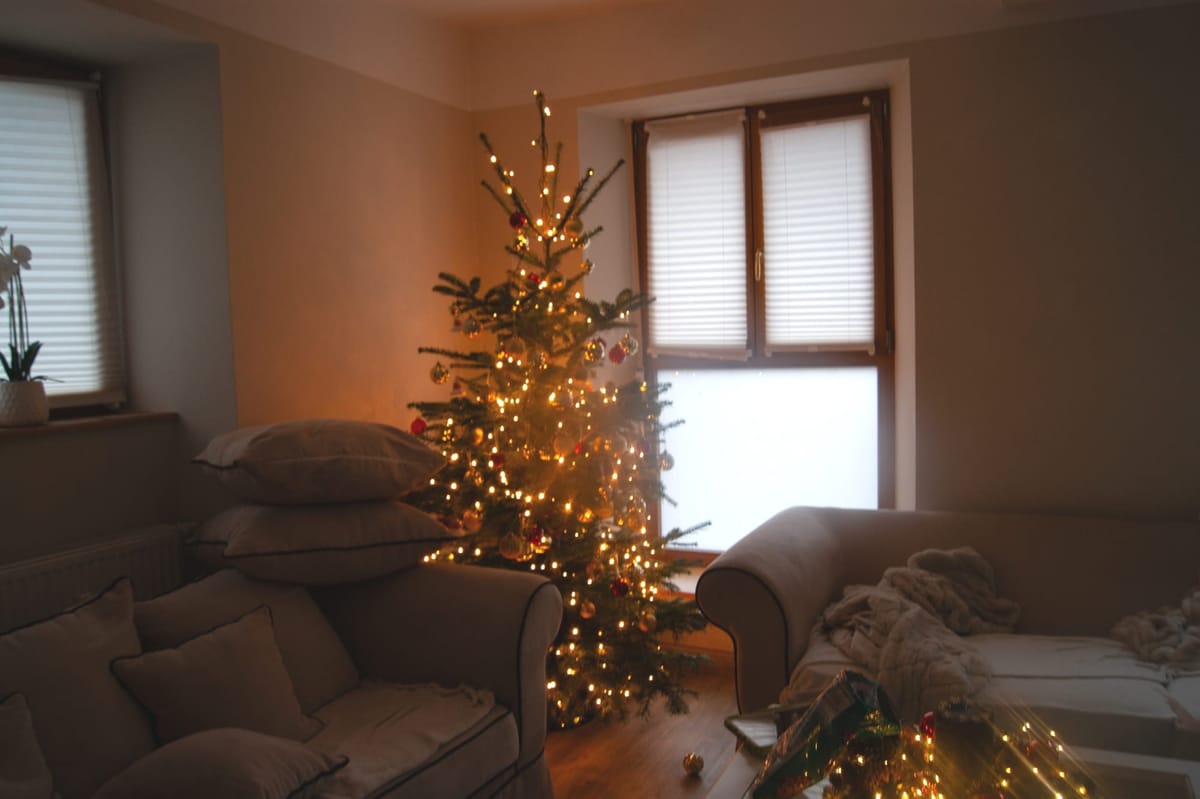
In an ever modernizing world, I have grown fatigued of digital ownership. Surrounded constantly by electronic black boxes of all sizes. Lifeless digital catalogs that seemingly reflect the richness of my music, video game, book, and movie collection. The painful reality of “nothing” being everywhere, on every device, is maddening to me. It all starts to blur into a mess of pixels. So much real art is stuck in the quicksand of short-form content and AI-slop, screaming out to be saved, and we’re not able to if we’re permanently staring at our damn phones.
This first-world problem I realize, is not really a problem. It’s an inevitable mark on the progress report of technology. But.. when the EMPs and nukes fall and the power goes out. After those that will starve, starve. And once those that will fail, do so. Things will find a new normal and we will seek art, new and old, even in all that madness. After all, we seek art in all this madness, and I see few differences in the two. Whether or not I would live to ever experience this problem is beside my point. If it happened today, I would have nothing. For so long in my life this mattered so little to me. Now I find it’s all I think about. I squirm in my empty home, with all the quirks of my personality and interests expressed through compressed files and hidden behind advertisement after advertisement.
A year ago I used to defend this very concept. I thought digital ownership was the future. I thought a nostalgia for inefficiency and the inevitable furthering of mass production for physical products, was silly relative to capabilities of technology in the twenty-first century. I have been a huge proponent of digital music consumption to the point of almost being anti-analog. I was born in 98' so I grew up with CDs. Binders full of my parents, and my millennial sister's music. Shortly after understanding how to take a CD out and get music playing by myself, mp3 players were starting to be popularized and widespread. I was so little, the idea of having to lug CDs to and fro seemed archaic and slow in comparison.
Being born on the cusp of the century and tech-boom, I was easily marketable to the promise of technology, and (as a child) fully bought into the hype. I remember that shiny MP3 player that my father protected dearly, being the coolest thing I had ever seen. And it's because of my father, a long time iTunes user, that I was one of the early adopters of Apple Music. I have always thought, and still do, that the digital landscape and capabilities for music was supreme in terms of quality. However, I see now the loss and limitations of digital ownership when it comes to those who fully subscribe to this method of ownership like myself. Diminishing the “quality” of the art in a different, and more important way.
I have to imagine the idea of "owning" music in the late nineteenth century was equal parts exciting and unfathomable. I’m sure people claimed that recorded performances would never replace live ones in front of audiences, or that doing so was somehow less artistic. Being able to listen to someone or groups of people sing or perform from the safety and comfort of your home? Crazy. The idea you could have 1,000 songs on a tiny black box shoved in a car's glovebox, to have all your favorite records on the road was something I had to see to believe in 2003. And just 23 years later, we all own everything, on every device, without ever owning anything for 13.99$ a month (or whatever).
The domination of subscription-based models for all media and art is exhausting and costs more per year than traditional physical ownership. And at the end of a year, after paying more and more each year, we still own nothing. We are renting viewing licenses and shelling out billions to corporations and depriving all but a few select artists of their rightful income.
Not really owning anything really changes the way I feel sitting in my living room. The supposed epicenter of home relaxation and my direct connection to creations beyond my own. A place that is often used as the center for communication from all sorts of senders for the home. Yet I often sit in that room staring at screens, convincing myself that I AM connecting. That I am lucky to have such good tech. Although this may be true, and I am lucky to be born in a time with all this technology, I feel less human than ever. I feel like the humans from Wall-E. I might just be part of the generation that begins that downward slope. But trust that there is nothing different between me and them, save a few hundred years (maybe).
"Okay so what, we're the fat people from Wall-E?"
I hear ya. Swipe right, hit skip, consume, it will all go away. Everything will fade into our screens and into computer processing. But there's a very real possibility that on this current trajectory, my kids (and yours) won't have any physical objects to represent the art and soul of our lives. Pieces of creation that I've carried with me and absorbed up to that point reflected in multitudes of pixels and code. If they never grow up seeing album covers in front of them, or accidentally break a CD, warp a record, never smell the inside of an xbox game, or have burned in their memory the covers of books they'll never read sitting on their parents shelves, then they'll never respect, and therefore, create works that rival ours. Either all of human work is lost to time and it starts fresh, or we keep sharing and growing, and all future works grow from it.
I read this Wall Street Journal article where they mention “Analog Rooms". Spaces that prioritize this very human element. Pianos instead of TVs, rotary phones, magazine racks, and record players. All with the goal of taking digital tech out of a room. In the WSJ piece, the homeowners, with the help of designers, interior decorators, architects, and an infinite budget, create some sleek examples of these "Analog Rooms". Most of them taking up small offices, attics, or even a whole basement. This was a fascinating idea to me. Coming at a time in my life where I've just had it with digital tech, wishing it would all go away. No alarms, no surprises. A pipe dream for sure... Yet, after being introduced to the idea of an analog room, I started to feel a glimmer of hope.
Hope that there is another way through this ever modernizing world. A thread that, when connected, allows us to communicate in deeper, more meaningful ways. So I have developed my own version of the “Analog Room”. Something that can be implemented for free and requires only commitment and passion for humans and their art.
I envision a real “analog room”, designed free of external influence and for all manner of shared activities. A place where friends and family could sit and talk without showing each other TikToks, scrolling their phones, or checking their spouse’s location. A place without the promise of everything, but instead only anything people can or will share. Somewhere where board games are played and puzzles are constructed, where journals are scribbled in, and books are read. Where humans can be human again and we can participate in our collective tradition that is communicating with each other. Through millions of ways this can be achieved without ever needing to use your phone or watch a TV screen. This analog room exists in your home currently. Yet, only survives from the perseverance to obey its laws.
Its laws are simple:
- No devices with internet access of any kind
- No cellphones
- Only art that exists in a physical sense, or that can be digitally presented without the need for internet connection (i.e. offline Xbox, offline iPad, offline movie/tv player) is allowed in the analog room
There are next some principles that also must be understood by all using the analog room, ensuring the room's spirit is kept alive:
- Art shared and enjoyed in this room can NOT be sandwiched between an endless scroll of AI-fuckery or algorithmic processes of curation.
- Sharing and consuming art is a deliberate, meditative act that, when performed in the analog room, demands focus and attention.
Within the threshold of the analog room, all art is respected as the product of human’s painstaking processes of creation. This art is welcomed into the analog room as a retaliation to the noise and chatter of the present world, hoping to connect us and ground us to the present and current state of our being. The analog room must be designed to protect the physical sharing and enjoyment of art of all kinds. Shielded from the outside world, the analog room allows its inhabitants to participate in our collective, and longstanding tradition of sharing human creation with each other. Modern advances in this pursuit should not be shied away from, save they violate any aforementioned rules or principles.
These guidelines are simpler stated than practiced. I believe that an active approach must be taken to implement, successfully, the rules required by an analog room. The household and its inhabitants must be in unanimous agreement of the constraints and freedoms of the analog room, and should treat its laws and principles seriously. It's perhaps best to let the analog room start small and grow to meet the home's inhabitants, wherever they are currently. Turning your living room into your analog room seems like a good idea, but sours once the modern western brain ceases to follow the analog room’s rules, ruining the room for all. The analog room’s capabilities should also reflect the user’s interests. My analog room will have the capabilities for its users to share records and CDs, play co-op video games on a couch, strum a guitar or bass, play board games, and sit and look over photo albums. Yours may only need to be a listening room for music, or a space by the window in an office to paint.
Remember the ideas behind the analog room are not inherently anti-technology, but rather anti-art-aggregate. The analog room is pro-human above all. It’s designed to force us back into an “archaic” way of media/art consumption, reflective of the 20th century and before. Its design forces users to participate in physical ownership over digital, and forces people sharing that space together to compromise and settle with the limitations of that medium of ownership. Its design reminds the users that art is not an endless stream of content on every platform, but a physical and tangible thing, made by humans, to be experienced by humans, in a way that connects or purposefully divides us. Its design will feel familiar to anyone who was born before or around 2000, but with more deliberate restrictions in order to protect this tradition for future generations.
I want my kids, nieces, and nephews to grow up surrounded by their parents' crap just like many in my age group and before did. This is not for the sole purpose of sharing our likes and interests regarding art, but rather an attempt to preserve the ritual that is sharing art with other people. Reinforcing the laws and principles of the analog room throughout the next generations’ life will hopefully impart the sensibilities and longevity of physical ownership.
Digital ownership is here to stay and I believe still even serves a functional purpose. I commute by train and foot and am thankful for my AirPods and Apple Music. I use this time and this medium to “speedrun” my music discovery, in hopes something stands out to me to share later. The process of sharing what I like, is reserved for the analog room, if and when possible. This forces me to have to physically own (or borrow) things that I want to share and experience in the analog room. Helping the artist with a real sale (not a digital view/stream), and giving those I am sharing the art with the physical experience of that art.
The analog room's laws in reality are no more “fixed” than the rules of a board game. As is, they allow the users to experience the analog room’s potential to connect us in more meaningful ways through the physical sharing of art and time. However, like “house rules” in a board game, if amendments must be made for increased user enjoyment, or accessibility purposes, then by all means iterate and adapt. The underlying goal of an analog room is to separate the human from the perception that all content is endless and generative rather than the product of a human, and create a specific space to share, physically, art amongst each other.
My partner and I’s analog room will look different from yours. Entering into someone’s analog room and respecting their rules and principles is part of the fun. The sharing of art is collaborative in nature, and having to adapt to each person’s unique ideas of “human connection” is something worth practicing.
I believe even with these simple rules and guidelines many, if not all of us will attempt to weasel out of the analog room’s constraints. Cases will be made for the inclusion of cellphones or computers with internet access, all of which, will inevitably ruin the sanctity of the analog room. Opposition will include ‘what-ifs?’ about safety, environmental concerns of increased or sustained physical product production, misled unwillingness to accept and integrate alternate forms of art, specifically digital art, negatively influencing artists of that medium, and those that still believe the best future for our civilization lies in our adherence to digital ownership over physical ownership.
Many of you may think this is a “cool idea” but will never seek to practically implement an analog room into your home, and that's okay. I am sure this alone is not the fix for the problems we all face in this modern age. Perhaps I am truly the last one to this conclusion, and you've already made strides in protecting physical ownership in your life, and for that I commend you. But for those of you that will or intend to implement such a room, I am desperate to hear your ideas and thoughts. Maybe together we can offer our descendants a future that's less iPad baby and more human focused. Would that really be so bad? Maybe in a completely technology derived future, an analog room, or the desire for one, will be all that separates us from machine.
Either way comment down below and let us know your thoughts!